What to Look for When Buying a Pre-Owned Boat in the Florida Keys.
Buying a pre-owned boat in the Florida Keys is one of the best decisions a serious angler or cruiser can make - and one of the easiest ways to make an expensive mistake. The used boat market in South Florida is active, the inventory is diverse, and the prices can look compelling. But the Keys environment is hard on boats. Salt, sun, humidity, and hard use separate well-maintained boats from problem boats quickly. Knowing what to look for before you buy is the difference between a great deal and an expensive lesson.
Why the Florida Keys Market Is Different
The Keys present specific challenges for used boat buyers that don't apply in other markets. Boats here spend more time in saltwater, get more sun exposure, and are often used harder than boats in northern or inland markets. A boat with 500 hours in the Keys has experienced more corrosive exposure than a boat with 800 hours on a freshwater lake in the Midwest.
That doesn't mean Keys boats are bad buys - many are exceptionally well maintained by serious owners who take pride in their equipment. It means you need to look harder and ask more questions than you would in a less demanding market.
The Pre-Purchase Survey
Never buy a used boat without a professional marine survey. This is non-negotiable regardless of how good the boat looks, how well you know the seller, or how straightforward the deal seems.
A qualified marine surveyor will inspect the hull, deck, structural components, electrical systems, mechanical systems, and bilge. They will identify osmotic blistering, delamination, soft spots in the deck, corrosion, and other issues that are invisible to the untrained eye. The cost of a survey - typically a few hundred to a few thousand dollars depending on vessel size - is insignificant compared to the cost of discovering a major problem after the purchase.
In the Keys, make sure your surveyor has experience with saltwater boats specifically. The corrosion patterns and failure modes in a saltwater environment are different from freshwater, and an experienced surveyor will know where to look.
Engine Hours and Maintenance History
What Engine Hours Mean
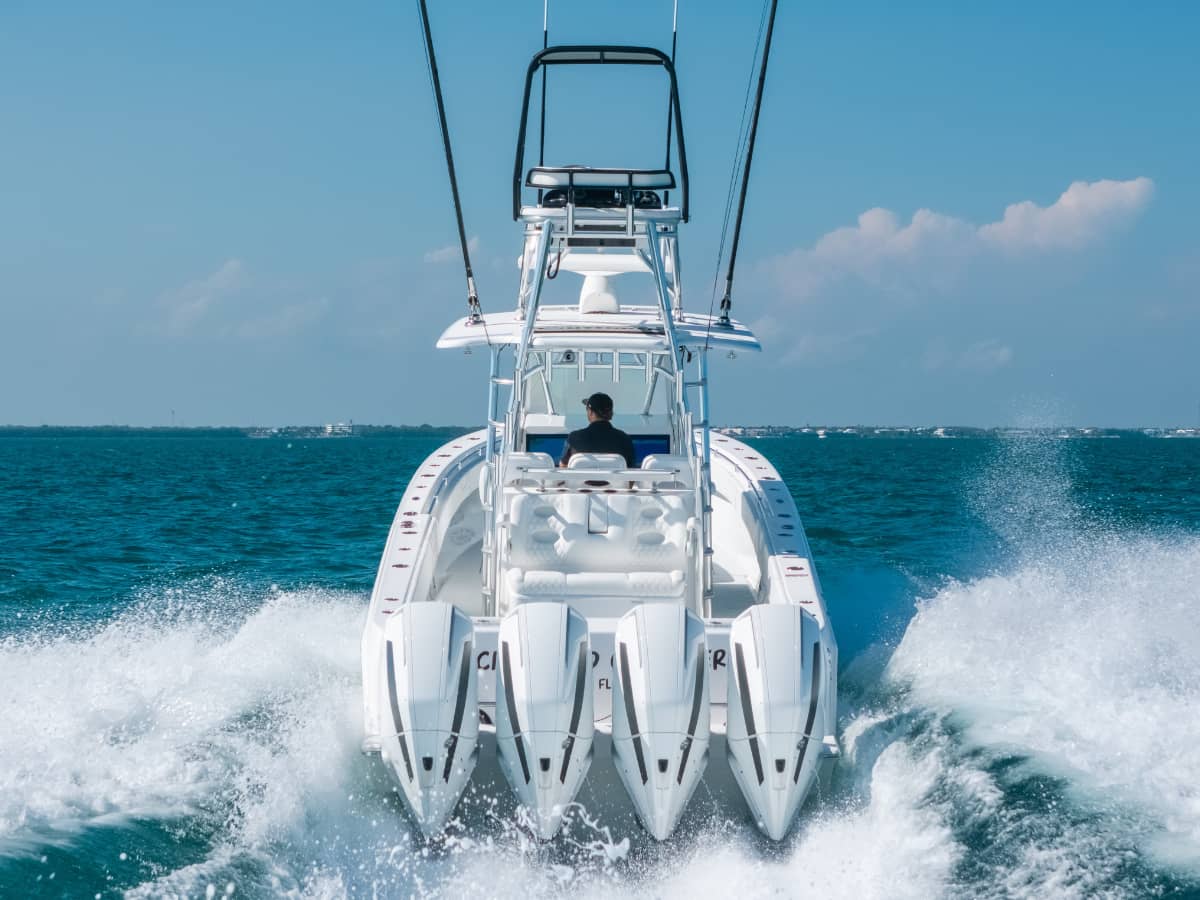
Outboard engines are generally considered high-hours above 1,500 to 2,000 hours, though this varies significantly based on maintenance history and operating conditions. In the Keys, where boats run hard in saltwater, many experienced buyers start paying close attention to engines approaching 1,000 hours.
Hours alone do not tell the full story. A well-maintained engine with 1,500 hours can be a better buy than a neglected engine with 400 hours. The maintenance history is as important as the number.
What to Ask For
Request the service records for every engine on the boat. You want to see oil changes, impeller replacements, spark plug changes, and any major service performed. A seller who cannot produce service records is a red flag. It does not necessarily mean the engines were neglected - some owners maintain their boats without keeping records - but it means you are buying blind.
Sea Trial
Every pre-owned boat purchase should include a sea trial. Run the boat at wide open throttle, at cruise, and at idle. Listen for unusual sounds, watch for smoke, check the gauges, and pay attention to how the engines start and respond.
Most boat dealers, requires a deposit to arrange a sea trial. This ensures serious buyers and protects the asset while it is being evaluated. The deposit is fully refundable if you decide not to move forward with the purchase.
Hull Condition
Gelcoat and Cosmetics
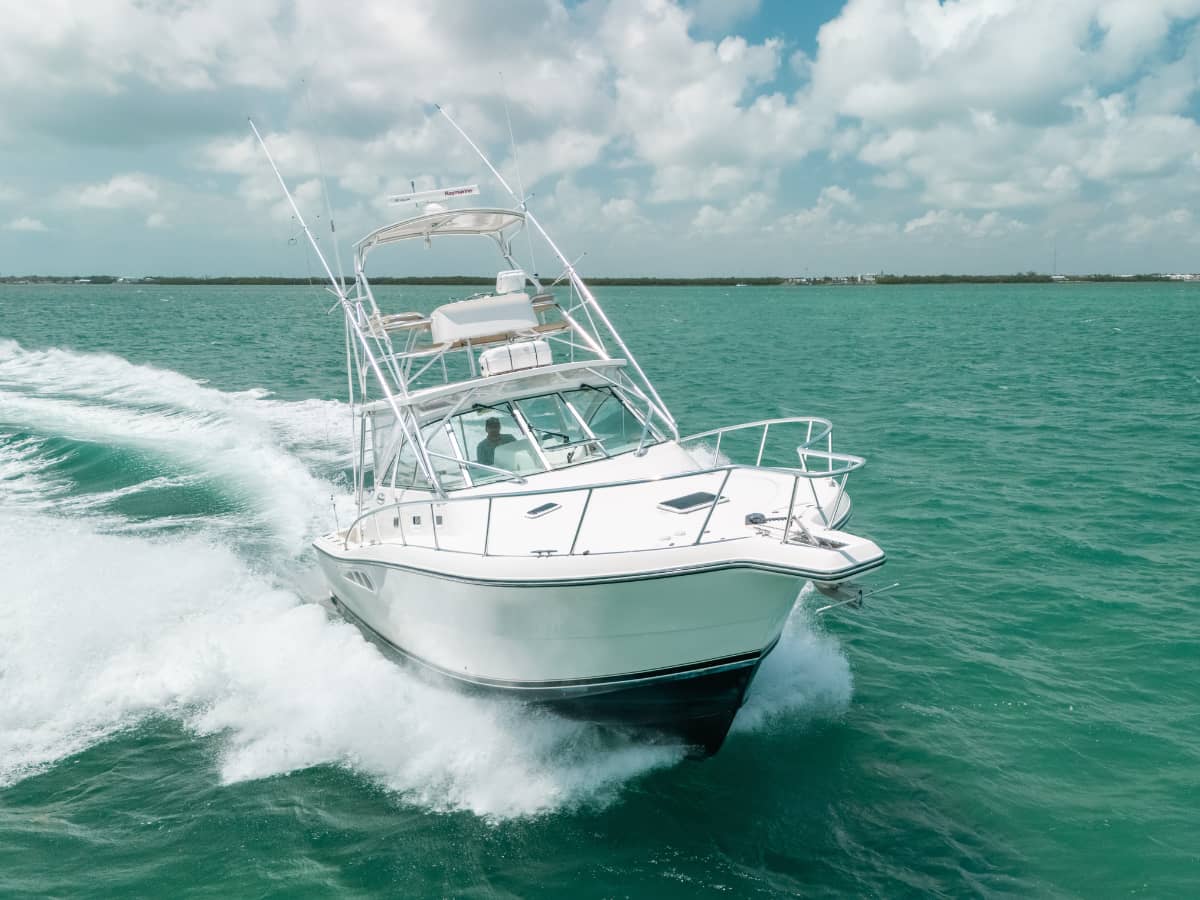
Cosmetic condition matters but it is the least important factor in a used boat evaluation. Faded gelcoat, minor scratches, and surface oxidation are normal on boats that have been used in South Florida sun. These are fixable. Structural issues are not simple fixes.
Osmotic Blistering
Osmotic blistering occurs when water penetrates the gelcoat and causes bubbles to form in the fiberglass laminate. Minor blistering is common and manageable. Severe blistering indicates deeper water intrusion and can require significant repair. Your surveyor will assess this, but you can do a visual check of the hull below the waterline before the survey.
Soft Spots
Walk the deck carefully and feel for any soft or spongy areas. Soft spots indicate water intrusion into the deck core - typically balsa or foam - which compromises structural integrity. This is one of the more serious issues a used boat can have and repair costs can be significant depending on the extent of the damage.
Transom Integrity
The transom is one of the most critical structural components on an outboard-powered boat. It takes the full thrust load of the engines. A compromised transom - soft, cracked, or showing signs of water intrusion - is a serious problem. Have your surveyor pay specific attention to transom condition, particularly on older boats.
Electrical Systems
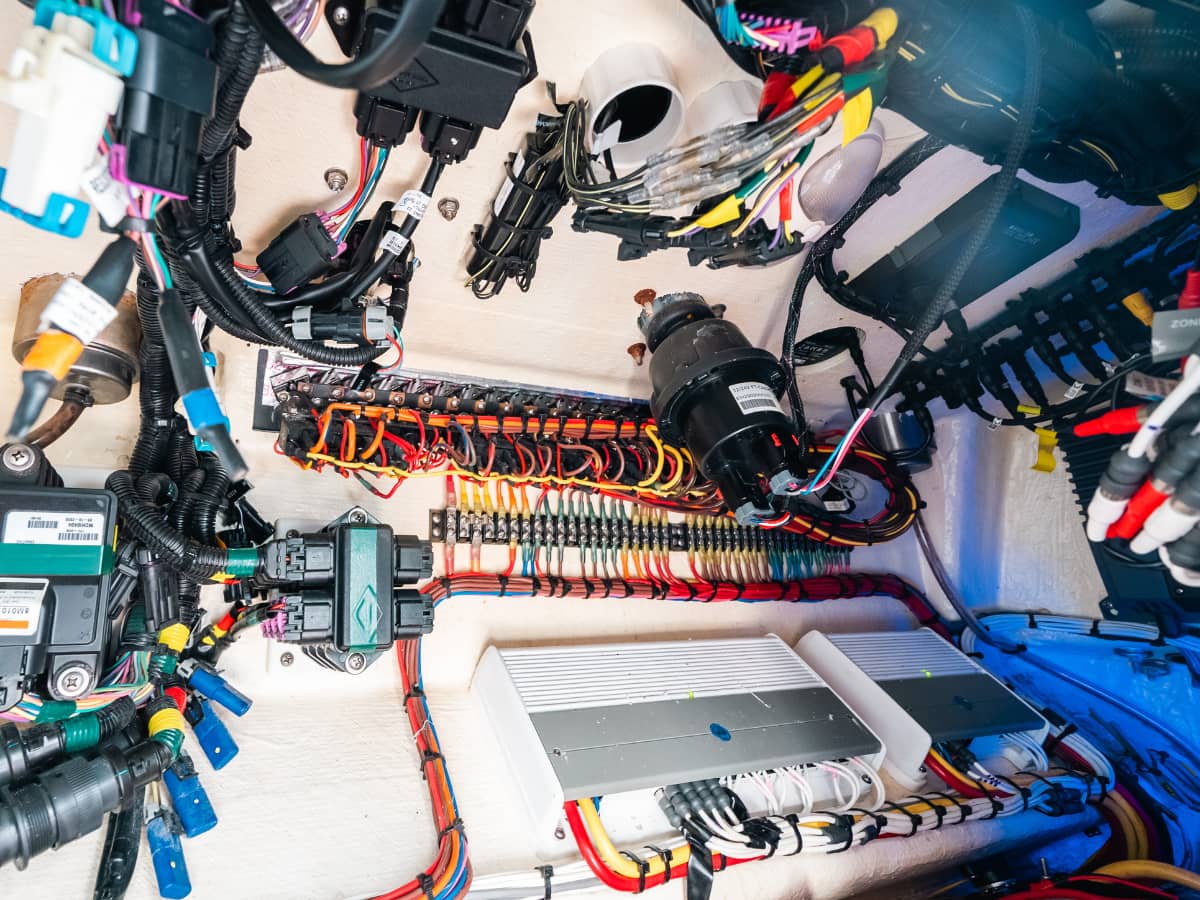
Electrical issues are among the most common problems on used saltwater boats and among the most expensive to diagnose and repair. Corrosion works its way into every connection over time, and boats that were not properly maintained or that sat unused for extended periods are particularly vulnerable.
Check that all electronics power on and function. Look at the wiring in the bilge and engine compartment for signs of corrosion, chafing, or amateur repairs. Ask about the age of the batteries and when they were last replaced. A full electrical inspection should be part of your survey.
Trailer Condition
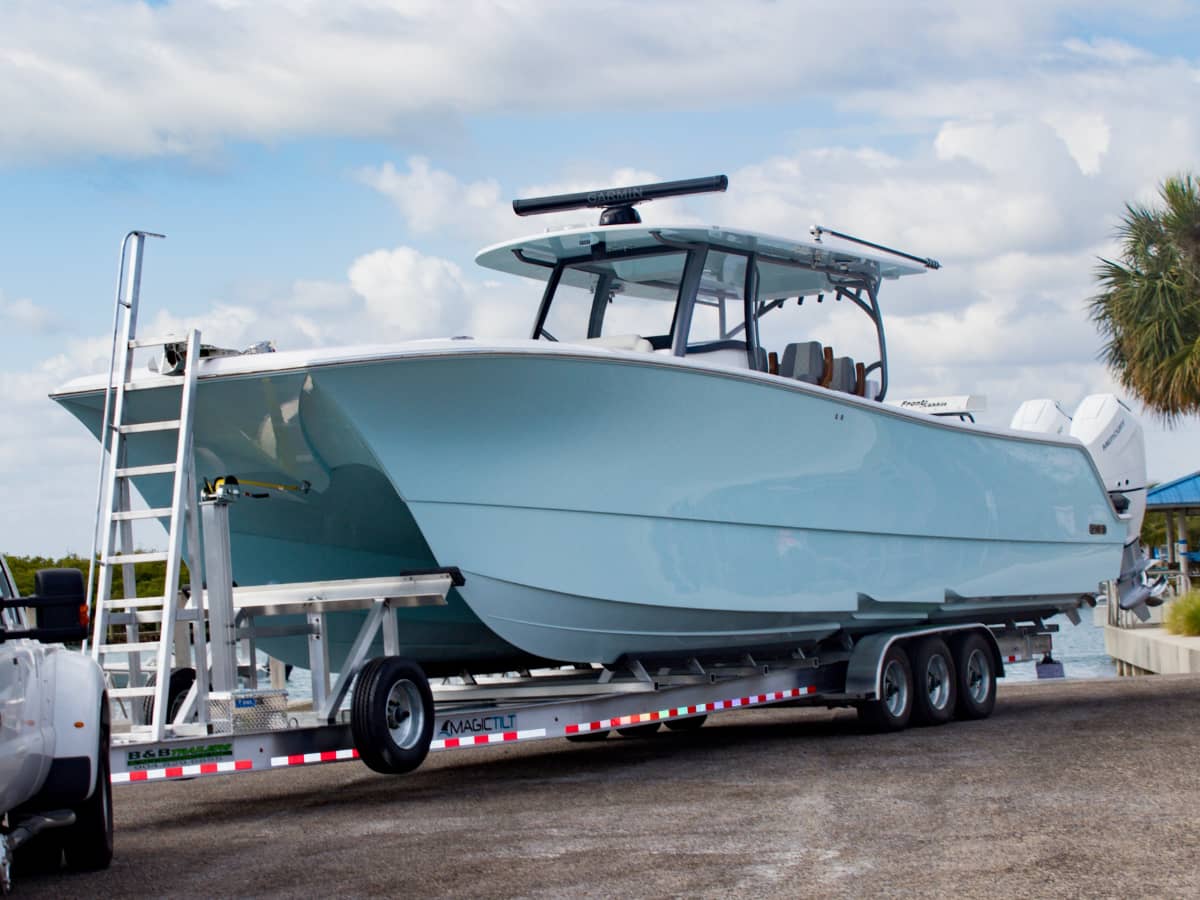
If the boat comes with a trailer, inspect it carefully. Saltwater trailers deteriorate faster than freshwater trailers. Check the frame for rust and corrosion, the bunks or rollers for condition, the lights and wiring, the wheel bearings, and the winch strap. A trailer that needs significant work adds cost to the purchase that may not be immediately obvious in the asking price.
Buying from a Dealer vs. Private Seller
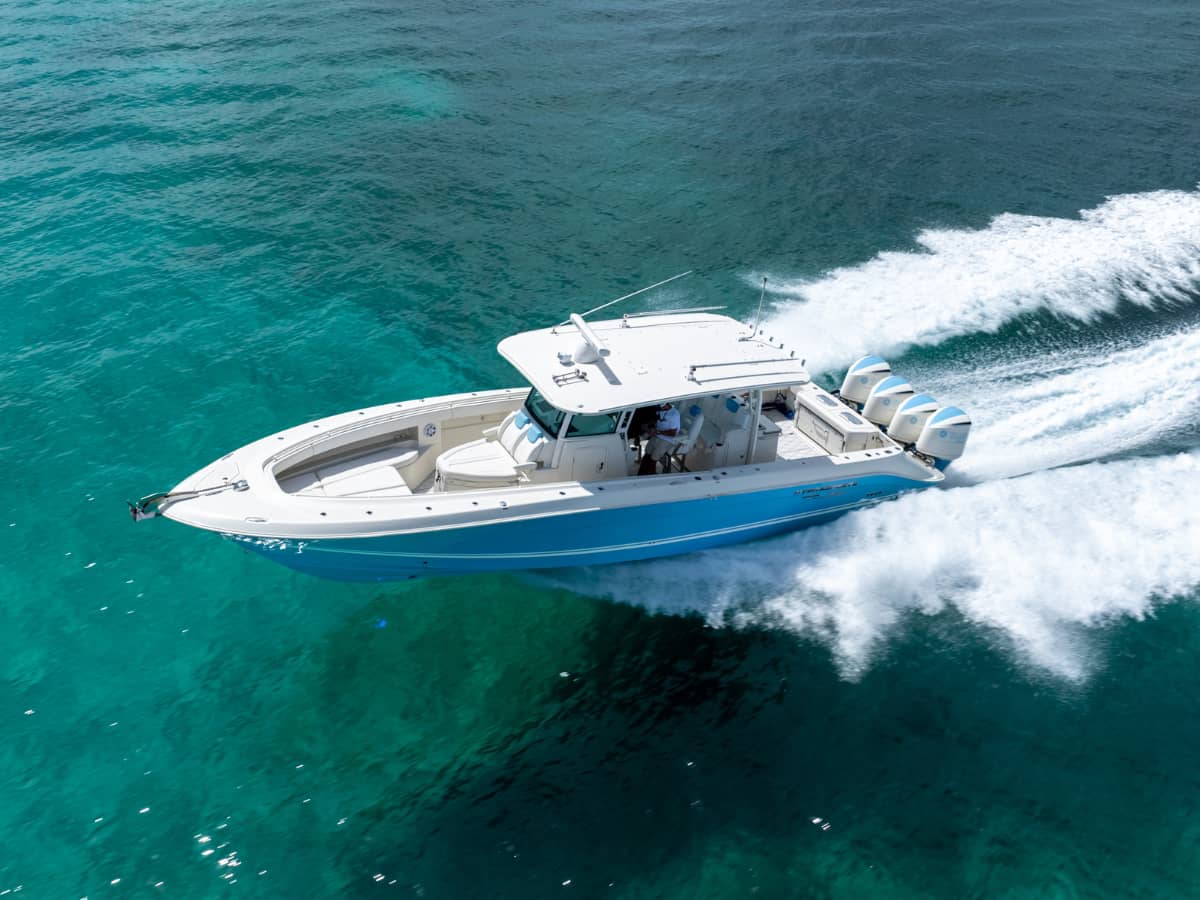
Both have advantages. A private seller may offer a lower price, but you are buying with no warranty, no service history guarantee, and no recourse if problems emerge after the sale. A reputable dealer stands behind the boats they sell, has the ability to inspect and service inventory before it goes on the lot, and can provide honest assessments of condition.
BTH Marine carries pre-owned inventory across a wide range of makes, sizes, and price points. Every boat in the BTH Marine pre-owned inventory has been evaluated by the team - the same people who service these boats and know what to look for in the Keys environment. Browse the current pre-owned listings or call the dock to talk through what you are looking for.
The Right Boat at the Right Price
The best pre-owned boat purchase is one where you paid a fair price for a boat in known condition. A survey, a sea trial, a review of service records, and an honest conversation with a knowledgeable local dealer will get you there. In the Florida Keys, that local knowledge matters. The team at BTH Marine has seen what this environment does to boats and can help you avoid the mistakes that cost buyers thousands of dollars after the sale.
Stop by the marina at 97951 Overseas Hwy in Key Largo, call (786) 882-7969, or browse the pre-owned inventory online.
