Starlink for Boats: What Every Boater Needs to Know | BTH Marine
Not long ago, staying connected offshore meant slow satellite phones, expensive systems built for commercial ships, or simply accepting that once you cleared the inlet you were on your own. Starlink changed that. High speed internet on the water is now a realistic option for serious recreational boaters, and it is changing what a day offshore, a Bahamas run, or an extended cruising trip looks like.
BTH Marine sells and installs Starlink in Key Largo. Here is what you need to know before you buy.

What Is Starlink and Why Does It Matter for Boaters
Starlink is a satellite internet service operated by SpaceX. Unlike traditional satellite internet services, which come from single geostationary satellites orbiting the planet at roughly 35,786 km, Starlink uses a constellation of satellites in low earth orbit below 600 km. Because Starlink satellites orbit much closer to Earth, latency is significantly lower, around 25 ms compared to 600 ms or more for traditional geostationary systems. According to Starlink, the service is capable of supporting streaming, video calls, online gaming, and other high data rate activities.
For boaters, this means real world internet on the water. Weather routing updated in real time offshore. Communication with family and crew from wherever you are. The kind of connectivity that simply was not available to recreational boaters at any realistic price point until recently.

Which Starlink Hardware Is Right for Your Boat
Starlink offers several hardware options for boat owners. According to Starlink, the Starlink Performance and Starlink Performance (Gen 2) are recommended for maritime environments due to their wider field of view and better performance in areas with potential obstructions such as marinas. The Starlink Standard Kit can also be used on boats but is more sensitive to obstructions due to a narrower field of view, which can cause short outages as satellites pass overhead.
For serious offshore use, extended passages, Bahamas runs, and charter operations, the Performance models are the right foundation. For boaters who primarily use their vessel at anchor or in marinas with less demand for in-motion connectivity, the Standard Kit may be sufficient.
The dish and power supply are water jet and dust resistant and have been tested by Starlink for long duration use in sustained corrosive marine environments. The WiFi router is designed for indoor use.
BTH Marine installs both. Hardware options, specifications, and availability are updated regularly by Starlink. Visit starlink.com or contact BTH Marine to confirm which hardware is current and right for your specific vessel before purchasing.

Understanding Starlink Plans for Marine Use
Starlink offers several plan options for marine use. The right plan depends on how far offshore you go, how much data you use on the water, and whether you need connectivity while underway beyond coastal areas.
Plan details, pricing, and availability change regularly. Contact BTH Marine or visit starlink.com directly for current plan options before making a decision.

What Starlink Does Well on the Water
For the right use case, Starlink on a boat is a genuine step change from what came before. Real time weather routing, communication with family and crew from offshore, and streaming entertainment at anchor are all realistic use cases that Starlink is designed to support.
For Bahamas runs, extended offshore trips, and passages to destinations like the Dry Tortugas, connectivity that does not depend on cellular towers or marina WiFi changes what those trips look like practically and in terms of safety and communication.
For charter operations, guest connectivity has become an expectation. Starlink addresses that in a way that cellular boosters and marina WiFi cannot match offshore.
What Starlink Does Not Do Well
An honest assessment matters here because Starlink has real limitations that affect how you plan an install.
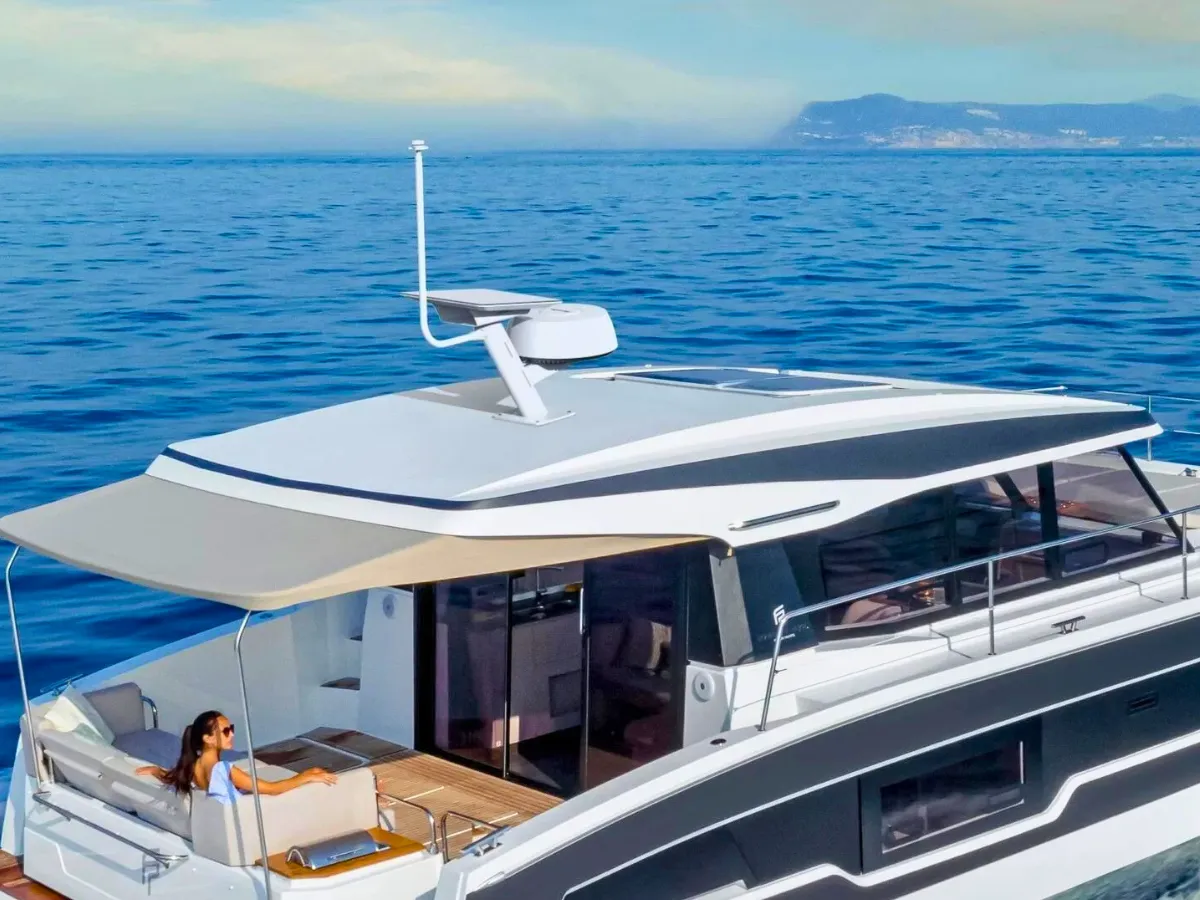
Starlink requires 100 percent unobstructed sky visibility to perform well. According to Starlink's own installation guidance, any obstruction, even small ones, may cause dropped packets, intermittent outages, or reduced speed. Towers, T-tops, outriggers, radar domes, antennas, and rigging all create potential obstructions. Mounting location on your specific vessel is one of the most important decisions in the installation process.
Power draw is a real consideration. Starlink requires a power supply input of 100 to 240V. For boats running on DC power, Starlink recommends a pure sine wave inverter rated at a minimum of 500 watts. This needs to be factored into your boat's electrical budget alongside everything else drawing power on board.
The WiFi router is designed for indoor use only and needs to be protected from the marine environment accordingly.
For day boats fishing nearshore who rarely go beyond cellular coverage, the cost-benefit equation is different than it is for offshore anglers, extended cruisers, and Bahamas runners. Starlink is a clear fit for the latter. For the former, a cellular booster may cover the need at a lower cost.

Installation Matters More Than You Think
Starlink hardware is well engineered, but how it is installed on your specific vessel determines how well it performs. Mounting location and sky view are the most critical variables. A dish mounted where rigging, a radar dome, or a T-top regularly blocks its view of the sky will underperform regardless of which hardware or plan tier you choose.
Beyond placement, cable routing, marine grade fasteners, drip loop protection, and integration with your boat's electrical system all affect long term reliability in a saltwater environment. Starlink's maximum cable run from dish to power supply is 25 meters, which needs to be accounted for in how the system is laid out on your specific vessel.
BTH Marine handles the full installation, from selecting the right mount location for your vessel to wiring and commissioning the system correctly the first time.

Is Starlink Right for Your Boat?
Here is a practical framework for deciding.
Starlink makes strong sense if:
You run offshore regularly beyond reliable cellular coverage. You do Bahamas trips, Dry Tortugas runs, or any extended passage where connectivity matters. You run a charter operation where guest connectivity is expected. You spend extended time at anchor in remote locations. You want real time weather routing offshore. You need reliable communication with family and crew from wherever you are on the water.
Starlink may not be the right fit if:
You are a day boat angler who stays within cellular range and does not need connectivity while underway offshore. Your offshore trips are short and infrequent enough that the cost does not justify how often you would actually use it. Your boat's electrical system is not set up to support the power requirements without meaningful upgrades.
Not sure which side of that line you fall on? That is exactly the conversation to have with the team at BTH Marine before you buy.

Talk to BTH Marine About Starlink for Your Boat
BTH Marine sells and installs Starlink in Key Largo. Whether you are outfitting a new build, upgrading an existing vessel, or trying to figure out which hardware and plan makes sense for how you use your boat, our team can walk you through the options and handle the full installation.
Stop by at 97951 Overseas Hwy in Key Largo or call us at (786) 882-7969.
